A snowy evening in the country — two views
<< | Paintings | >>
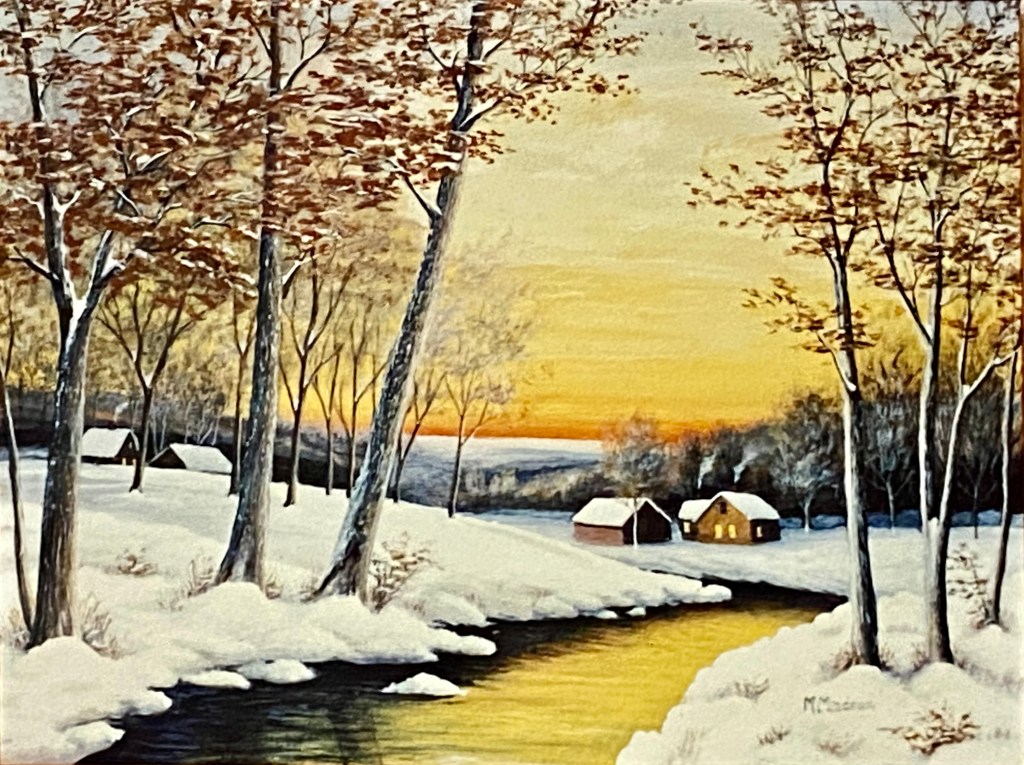
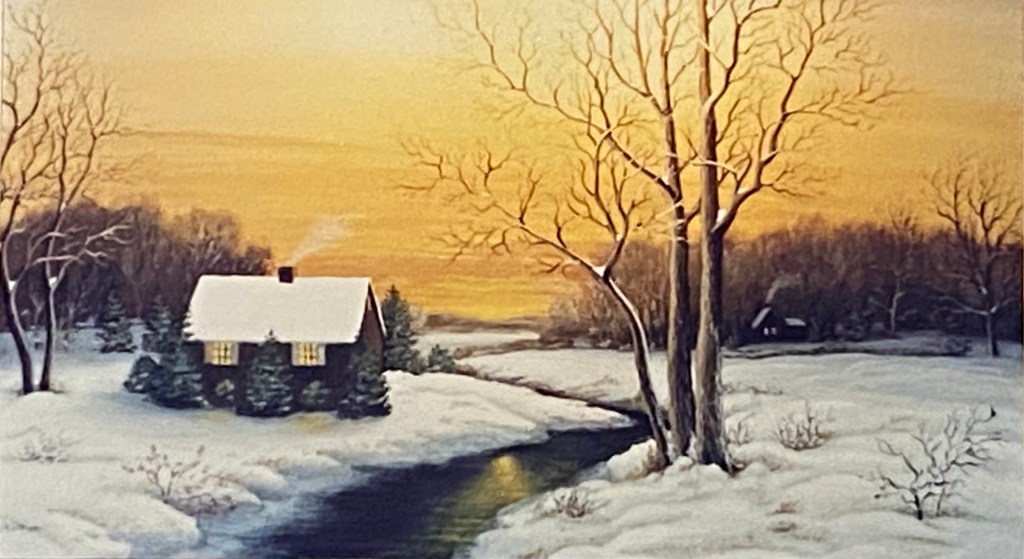
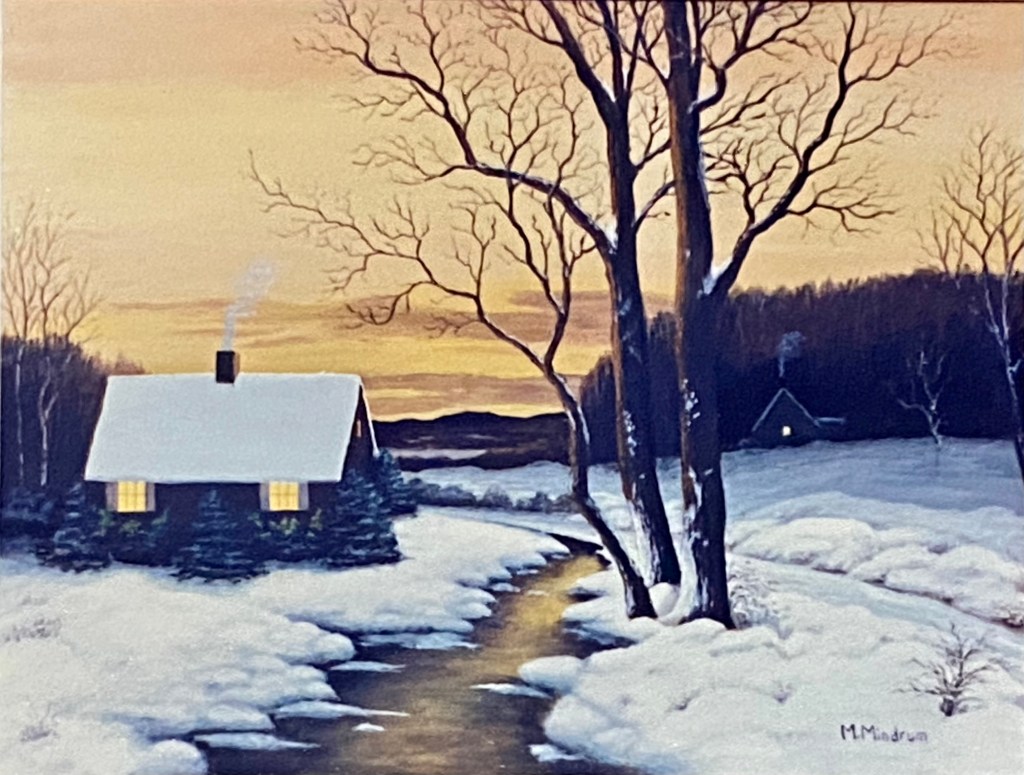
Margit created a lot of paintings that she called “winter sunset”. And yes, they all show a snowy countryside with a golden glow to the sky after the sun has fallen below the horizon. Beyond the season and time of day required by the name, the paintings also contain trees (of course!), a stream that doesn’t seem to ever freeze over, and one or more small houses hunkered down for the cold darkness of the night to come.
Beyond those broad strokes, you’ll start to notice two distinct variations under the umbrella term “winter sunset”. Look at where Margit places the houses (it’s hard not to call them cabins). In some paintings there’s a prominent house on the left bank of the stream — in other scenes you’ll find the house(s) farther downstream and off to the right.

Left: The main house stands on the left bank, fairly close (that is, “winter sunset [near left]”).
Right: The buildings are farther away and seemingly on the right bank of the stream (“winter sunset [far right]”).
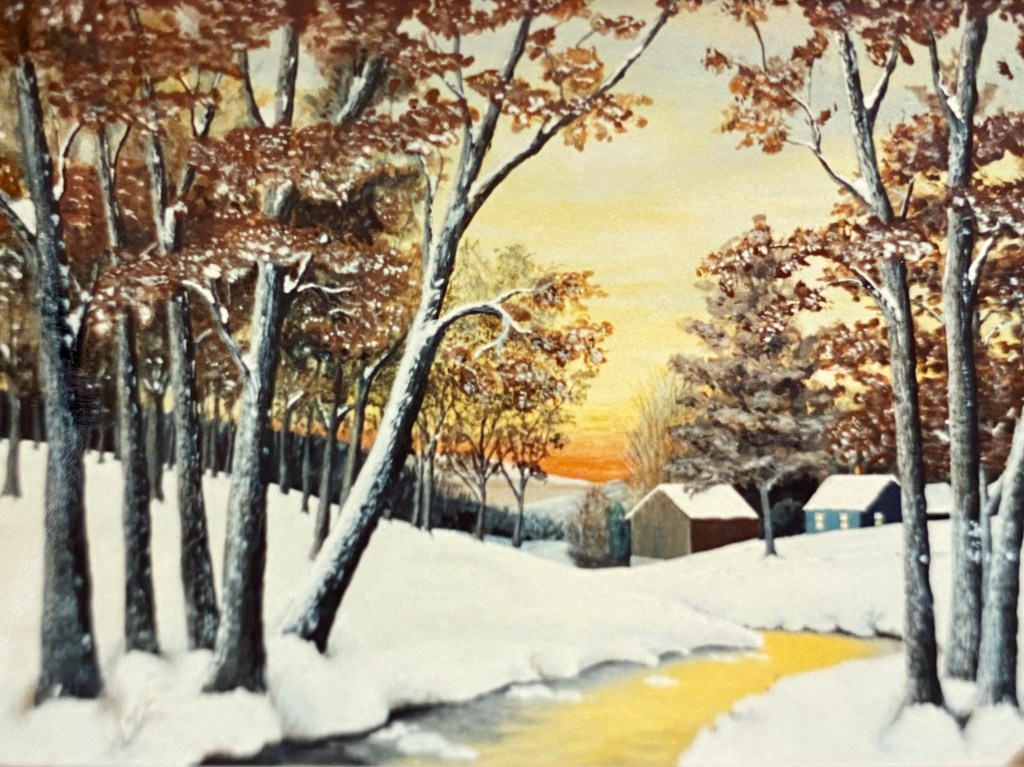
Check out a number of “far right” paintings side by side.
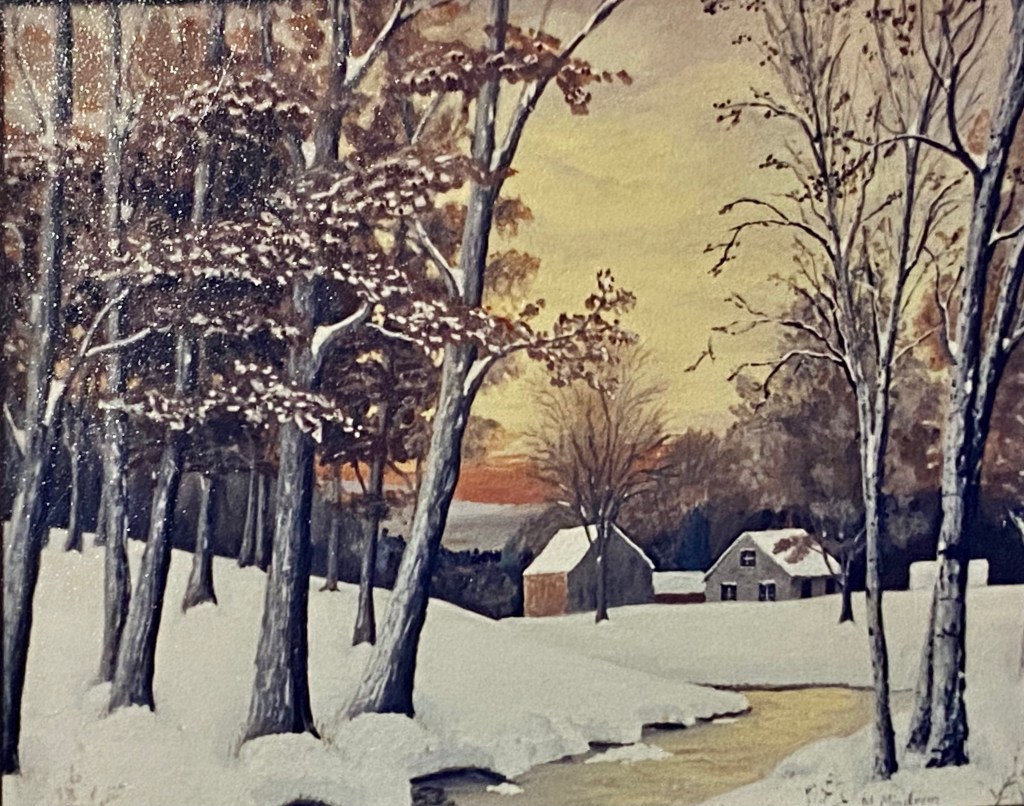
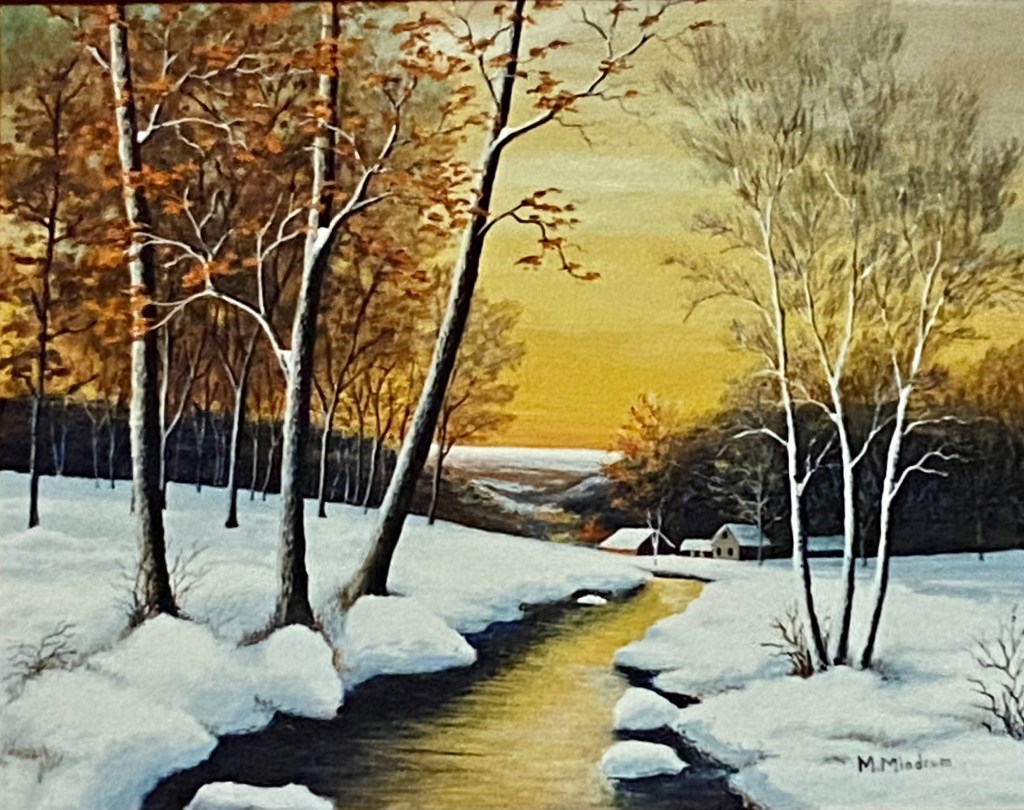
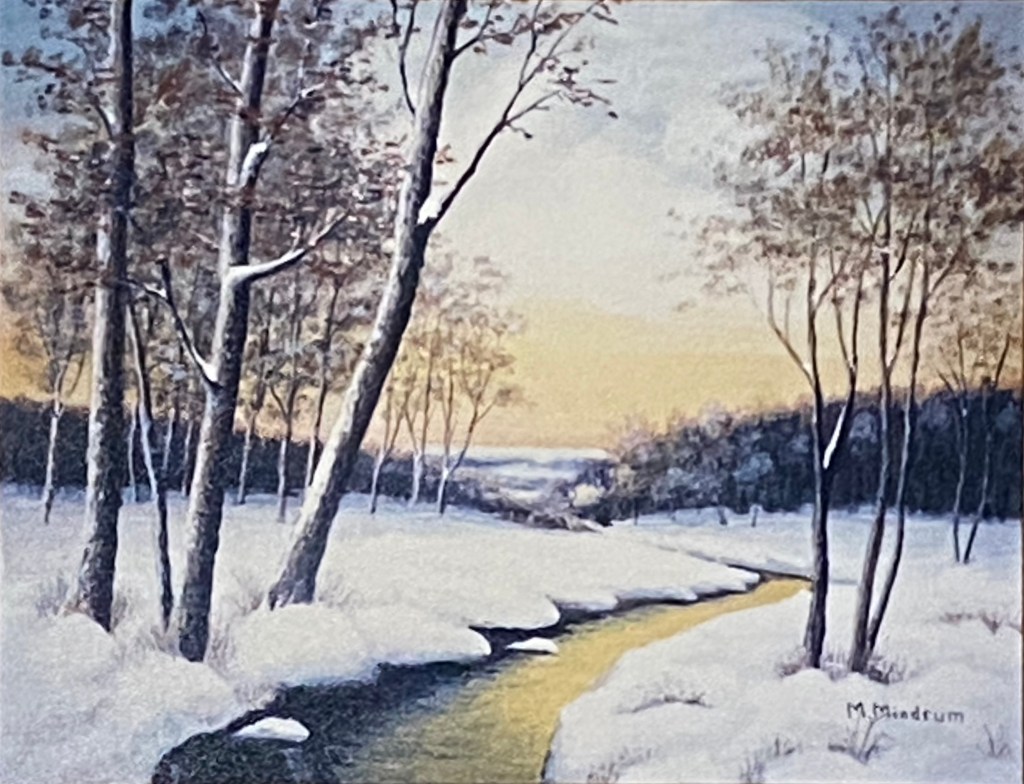
Check out some “near left” paintings:
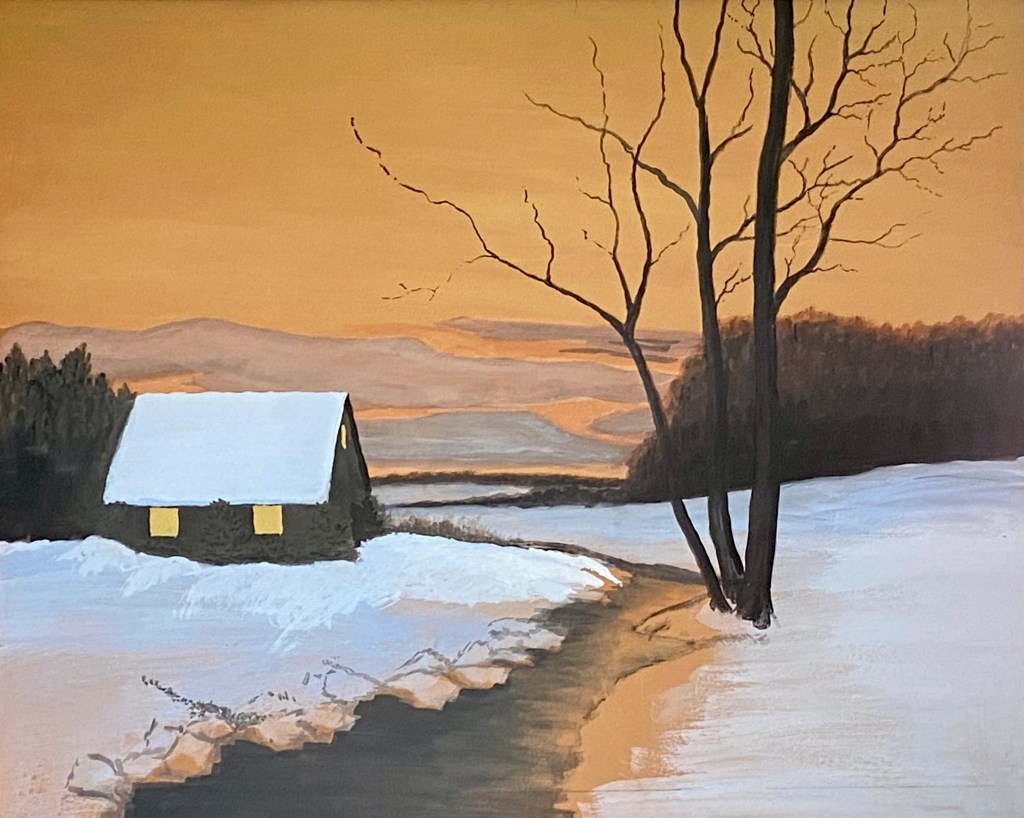
- Winter Sunset (refno = ?)
- Dimensions:
- Medium: Gouache on board
- Alt text: An evening winter scene in gold, white, and dark browns. A bare tree and a creek dominate the foreground center. At left sits a small house with two golden windows. At right in the distance, a second house is barely visible against the dark trees. A thin trail of smoke rises from the chimney of each house. With the sun recently set, a golden-orange sky hangs over the snowy landscape and is mirrored in the creek.
Margit is known to have painted primarily in the winter months. She was likely still at her easel many days when the sun set. She still had at least one of these unfinished “Winter Sunset” scenes on her easel when she died.
 Margit Mindrum